
1. GENERAL
A state is a construct that must be organised. It is necessary to determine who is entitled, authorised or obliged to do what – whether this concerns state bodies or those subject to the law.
In Austria, this organisation is nowadays enshrined in the constitution (as it is in many other countries) – Austria is therefore a „constitutional state“.
This was not always the case: whilst under the current Federal Constitution, sovereignty derives from the people (Article 1 of the Federal Constitutional Act), it previously derived from the monarch. The monarch ruled alone – he was the holder of state power. Because of this unrestricted rule, this form of government is also known as absolutism. The epitome of a classic absolutist ruler in Europe was King Louis XIV (the Sun King), who ruled France alone from 1643 to 1715. It is therefore hardly surprising that he is credited with the famous statement „L’État, c’est moi!“ – „I am the State!“.
In Austria, the monarch’s power varied in strength: under Emperor Charles VI, for example, classical absolutism reached its zenith by 1740; the Emperor combined legislative, administrative and judicial powers in his person. Under the enlightened absolutism of his daughter Maria Theresa (1740 to 1780), the first moves were made to reform the state for the benefit of her subjects (in particular, the modernisation of the administration and the education system). The December Constitution of 1867 marked the great transition to a constitutional monarchy. Legislation and administration were, for the first time, subject to constitutional constraints under this constitution. The monarch, too, had to accept restrictions on his – hitherto absolute – power.
The adoption of a constitution for Austria thus, in particular, subjected the exercise of absolute and unrestricted state power to fixed legal limits and made it subject to scrutiny (e.g. by the courts). Furthermore, its function is not limited solely to the organisation and order of the state – and thus also to the prevention of abuse of power. Rather, rights – such as fundamental rights and civil liberties – were granted to those subject to the law, which protect them from state interference.
The Austrian Federal Constitution currently in force – the Federal Constitutional Act of 1920 („B-VG“) – came into force on 1 October 1920 and remains in force to this day, with the exception of the constitutional laws that were in force during the „Ständestaat“ (1934 to 1938) and during Austria’s annexation to the German Reich (1938 to 1945); it was reinstated by the Constitutional Transition Act of 1945. The Viennese university professor Hans Kelsen is usually referred to as the „father“ of this constitution; it was under his leadership that work on the drafts began in 1919. In fact, there were other „fathers“ as well, including Ignaz Seipel, Otto Bauer, Robert Danneberg, Heinrich Clessin and Michael Mayr (who took over the Office of the State Chancellery from Karl Renner).
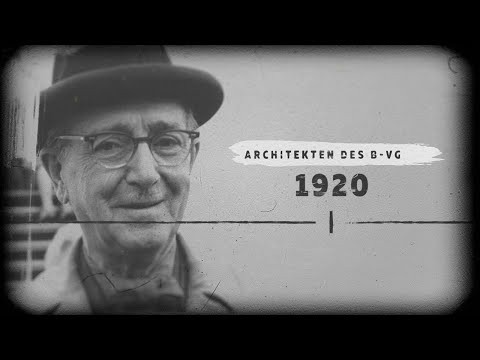
(Source: https://www.youtube.com/watch?v=kIWLW36d-vQ; under https://on.orf.at/video/13396741/Hans-Kelsen-und-der-Entwurf-der-Verfassung You can view the entire film footage of Hans Kelsen that exists in this context. Highly recommended!)
In addition to the Federal Constitutional Act (B-VG), there are, of course, a large number of other constitutional laws (e.g. the Basic Law of 1867, the Federal Constitutional Act on the Protection of Personal Liberty, the European Convention on Human Rights, the Federal Constitutional Act on the Rights of Children, and the Neutrality Act). Taken together, they constitute constitutional law, which, alongside administrative law, forms part of public law.
2. THE CONSTITUTION IN THE FORMAL AND SUBSTANTIVE SENSE
The constitution (constitutional law) can be distinguished in terms of form and substance.
a. In the substantive sense, constitutional law is considered purely in terms of content – the question is what is typically laid down in a constitution. This includes, for example, all those provisions governing the organisation and the state organs. Another key point is the exercise of state power, which in Austria is organised on the basis of the separation of powers. Of course, the rules governing the enactment of laws are also laid down (what majorities are required for the enactment of constitutional or ordinary laws?). What form of government should apply (monarchy, republic)? It must also be determined what system of government (autocracy, democracy) should apply, and much more besides.
b. The Constitution in the formal sense refers to all those legal norms which are formally enacted by Parliament (at federal or provincial level) as constitutional laws (irrespective of their specific content). This also includes those international treaties which have constitutional status. Pursuant to Article 44(1) of the Federal Constitutional Act (B-VG), all provisions that have been formally enacted with constitutional status must be designated as such – namely as a constitutional law or a constitutional provision.
Two particular points should be noted here: Firstly, the rule applies that „constitutional law in the substantive sense must be enacted as constitutional law in the formal sense“. If a rule, the content of which qualifies as constitutional law in the substantive sense, is not adopted with the qualified majorities required for constitutional law in the formal sense, it is itself unconstitutional. Secondly, the Austrian Federal Constitution (unlike the German Basic Law) does not contain a „codification requirement“: It is therefore not necessary to incorporate all formal constitutional provisions into the Federal Constitutional Law (B-VG); such constitutional provisions may also be contained in separate constitutional laws (e.g. the Neutrality Act) or in constitutional provisions within ordinary laws. This fragmentation led the eminent Austrian legal scholar Hans Klecatsky to speak, at an early stage, of the „ruinous nature of the Austrian Federal Constitution“.
3. TO PUT IT INTO A NUTSHELL
The B-VG is currently in force in Austria. It sets out the most fundamental provisions (rules on the creation of law, the organisation and structure of state bodies, the separation of powers, fundamental rights and legal protection). In addition, there are numerous other constitutional laws which, taken together, constitute Austrian constitutional law.
If the constitution is considered purely in terms of its content, it is referred to as the „constitution in the substantive sense“. If, on the other hand, the focus is purely on the manner in which the law is enacted – that is, on its form – it is referred to as the „constitution in the formal sense“.
Whether you have questions about substantive or procedural constitutional law, or wish to assert your constitutionally guaranteed rights (fundamental rights) in court – we’re here to support you. With us, you’re always in the best of shape! Score big with us!
Written by:

SHMP Schwartz Huber-Medek Partner Rechtsanwälte GmbH
Hohenstaufengasse 7
A-1010 Vienna
tel: +43.1.513 50 050
fax: +43.1.513 50 05-50
office@shmp.at